
Preventive Maintenance
Michigan Winter Property Prep: The Landlord & Community Manager Guide
7 min read
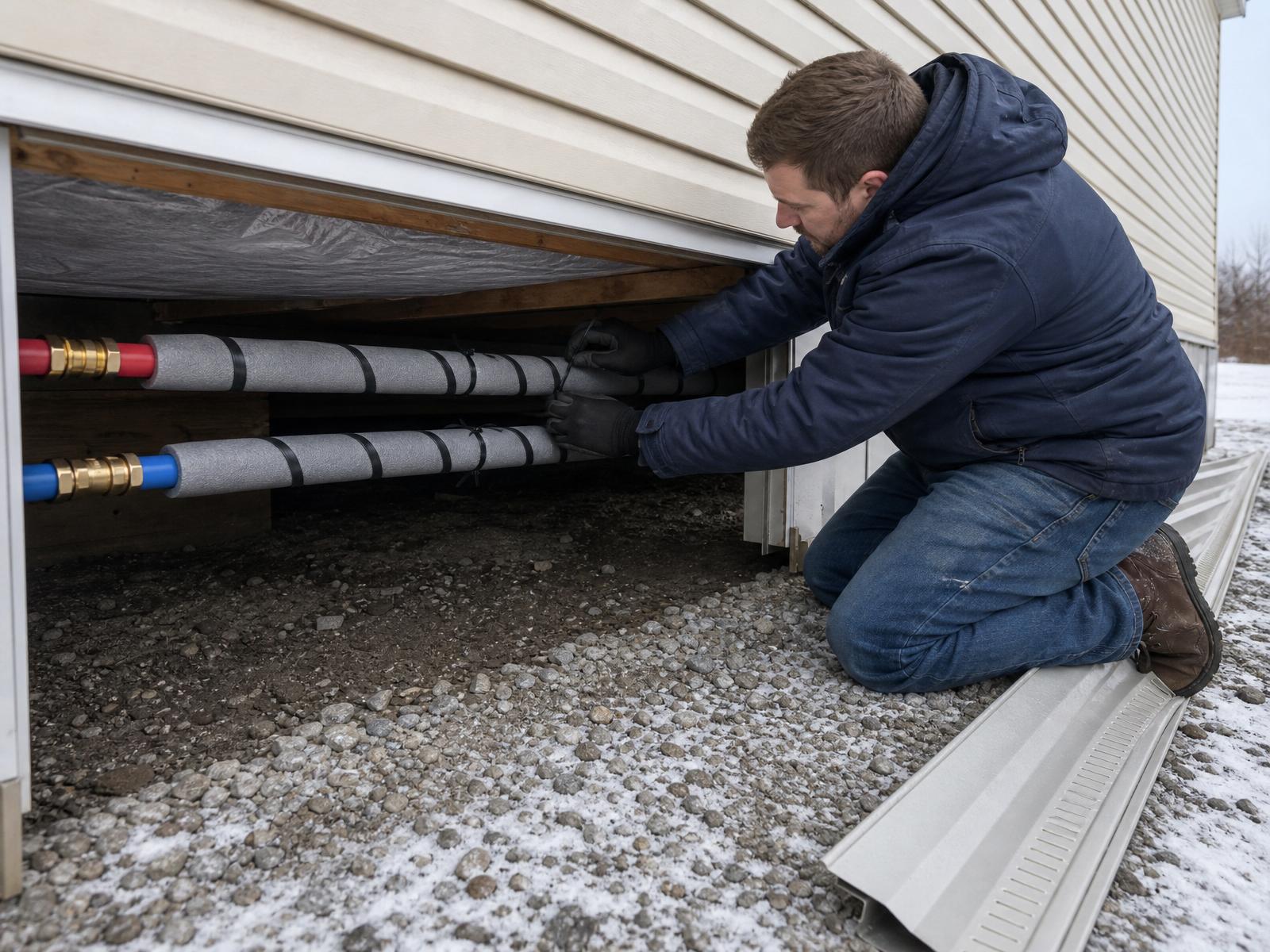
Michigan winters break properties that aren't ready for them. One frozen pipe, one collapsed section of skirting, one un-cleared walkway with a slip-and-fall — any of those costs 10× what an hour of prep would. This is the checklist we use for rental portfolios and manufactured home communities across Southeast Michigan.
Exterior water
- Shut off every exterior water bib at the interior shutoff, then open the exterior valve to drain.
- Disconnect and drain every hose. Store hoses inside if possible.
- Insulate any exposed pipe runs (crawl spaces, garages, unheated basements).
Skirting and crawl spaces
- Walk every side of every manufactured home. Fix cracked, missing, or lifted panels before the first freeze.
- Confirm all vent panels are closed or covered for winter.
- Check heat tape on exposed water lines and confirm it's plugged in and working.
- Verify vapor barrier is intact if you can access the crawl.
Roof and gutters
- Clean gutters after leaf drop (usually early-to-mid November in SE Michigan).
- Confirm downspouts drain 4+ feet away from the foundation.
- Inspect roof edges for missing shingles or damaged flashing.
- Address ice-dam-prone areas with attic ventilation or heat tape before snow starts.
Interior HVAC and safety
- Fresh furnace filter; verify a full heat cycle.
- Set every occupied thermostat to safe minimum (55°F on any vacant unit).
- Test smoke and CO detectors and replace batteries.
- Confirm water heater is set to 120°F.
Vacant units
- Winterize (drain plumbing + pour antifreeze in traps) OR keep heat at 55°F minimum plus weekly checks.
- Interior cabinet doors open under sinks on exterior walls.
- Leave a slow drip on the coldest-facing faucet during hard freezes.
Community & common areas
- Snow response plan — plow contract signed, salt on-site, priority routes mapped.
- Walkway ice management — sand or ice-melt at every entrance and common walkway.
- Signage and mailbox reinforcement before snow.
- After-hours emergency contact posted for residents.
Want us to handle winter prep on your portfolio? See our preventive maintenance service, or request a plan.