
Mobile Home Skirting: The Complete Guide (Materials, Installation & Repair)
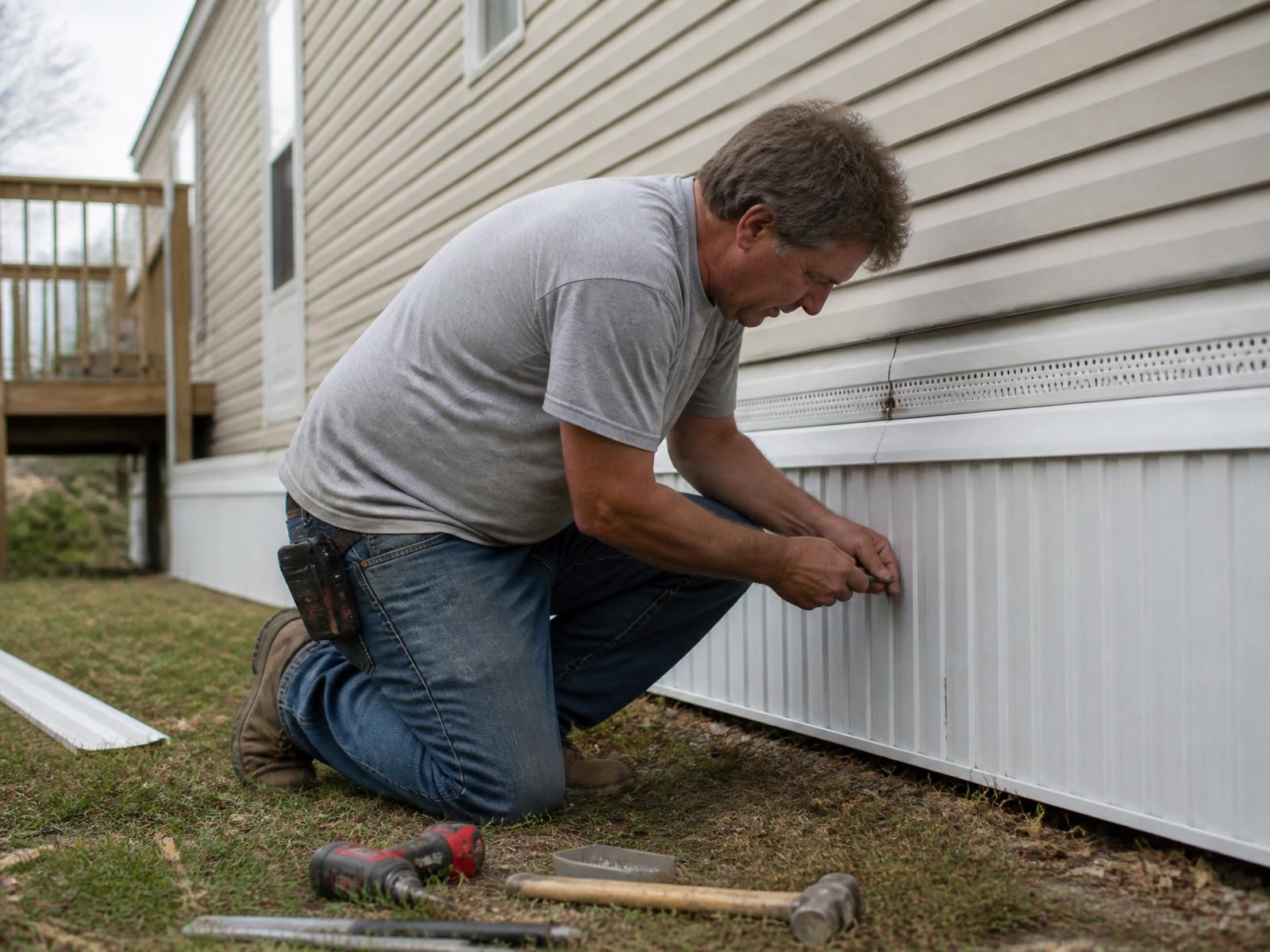
Mobile home skirting costs $700–$1,500 installed for a vinyl single-wide in Southeast Michigan, $1,200–$2,500 in metal, and $2,500–$6,000+ in faux stone. This guide covers what skirting does, which material to pick, the 2026 cost of each, how installation works, what Michigan venting and anchoring rules require, when DIY makes sense, and how repairs are priced. Written for community owners, park managers, landlords, and homeowners across Southeast Michigan.
2026 mobile home skirting cost in Southeast Michigan
- Vinyl, single-wide — $700–$1,500 installed
- Vinyl, double-wide — $1,100–$2,200 installed
- Metal (aluminum / galvanized), single-wide — $1,200–$2,500
- Insulated vinyl — add $300–$800 over standard vinyl
- Faux stone or brick panel — $2,500–$6,000+
- Panel repair (1–5 panels) — $200–$600
- Bottom track reset / releveling the track — $250–$700
- Access hatch or vent panel replacement — $85–$250 each
- DIY material only, vinyl single-wide — $400–$900
Cost drivers, in order: home length, how far out of level the grade is, whether the old bottom track can be reused, and the material. A home on a sloped lot can add several hundred dollars because every panel gets a custom cut.
What mobile home skirting is (and why it matters)
Skirting is the panel material that wraps around the base of a manufactured home, sealing the gap between the floor frame and the ground. Done well, it does four things:
- Blocks pests — raccoons, opossums, feral cats, and mice all try to nest under manufactured homes.
- Protects pipes — in Michigan winters, exposed water lines under the home freeze fast.
- Manages moisture — properly vented skirting lets crawl-space air circulate.
- Sets curb appeal — clean skirting reads as "cared for."
Mobile home skirting materials: vinyl vs. metal vs. faux stone
Vinyl skirting
The most common option in Southeast Michigan communities. Modular panels slide into a top and bottom track, cut easily with a utility knife, and are cheap to replace. Downsides: UV brittleness after 8–15 years and dents from impacts.
Metal skirting
Aluminum or galvanized-steel panels. Longer lifespan (15–25+ years), better pest resistance. But once a panel dents, it stays that way.
Faux stone and brick skirting
Looks the most permanent, holds resale value, and is very durable. Trade-off is price — 3–5× the cost of vinyl.
How to install mobile home skirting (step by step)
- Measure the perimeter. Add 10% for cuts and waste.
- Level and set the bottom track. It needs to be level or the panels won't line up.
- Attach the top rail. Screws into the bottom edge of the home's floor frame.
- Cut and slide panels in place. Leave 1/4" of expansion room.
- Install vent panels. Roughly 1 sq ft of net free vent area for every 150 sq ft of floor.
- Seal and inspect. Caulk gaps at hitches and utility penetrations.
Common problems and fixes
- Cracked or missing vinyl panels — splice in matching replacements.
- Bowing panels — bottom track wasn't level or panels lacked expansion room.
- Skirting blown off in a storm — top rail fasteners are the usual failure point.
- Frozen water lines — combine skirting with pipe insulation. See our preventive maintenance service.
- Pests getting under the home — look for gaps at the bottom rail and missing vent screens.
Michigan rules: venting, anchoring, and frost
Manufactured homes in Michigan fall under the Michigan Manufactured Housing Commission's installation standards, which follow the federal HUD Model Installation Standards (24 CFR Part 3285). For skirting, three points matter in practice:
- Ventilation — roughly 1 square foot of net free vent area per 150 square feet of floor, distributed around the perimeter so air actually crosses the crawl space rather than pooling at one end.
- Ground moisture — a vapor retarder over exposed ground under the home is required in most installations; skirting alone does not control moisture.
- Access — a removable access panel at least 18 by 24 inches so utilities and the underbelly can be reached without cutting panels.
Skirting is not a foundation and is not load bearing. It also should not be buried so deeply that frost heave lifts the track. Local municipalities in Macomb and St. Clair counties may add permit or appearance requirements, and individual communities often have their own rules on material and color — check both before ordering.
DIY vs. hiring a pro
DIY is realistic when
- The lot is close to level and the existing track is straight and reusable
- You're patching or replacing a handful of panels in a matching profile
- You have a full weekend, a helper, and a long level
- Material cost of $400–$900 against $700–$1,500 installed is worth the weekend to you
Hire it out when
- The ground slopes, so every panel needs a scribed cut
- The bottom track needs to be re-trenched and re-leveled
- You're changing material — vinyl to faux stone needs different framing support
- There's underbelly, insulation, or plumbing work to do while the skirting is off
- It's a rental or community lot and the turn is on a deadline
The most common DIY failure we get called to fix: a bottom track set by eye rather than by level. Panels won't seat, then they bow in summer heat and pop out in the first wind.
How long each material really lasts in Michigan
- Standard vinyl — 8–15 years; UV makes it brittle and mower strikes finish it
- Insulated vinyl — 10–18 years, and noticeably better for pipe protection
- Metal — 15–25+ years; dents are permanent but it doesn't get brittle
- Faux stone — 25+ years; best resale appearance, highest up-front cost
Over a 25-year hold, faux stone and metal usually cost less per year than replacing vinyl twice. For a rental or a home you plan to sell soon, vinyl still wins on cash outlay.
Skirting installation and repair in Southeast Michigan
R & D PropertyWorks handles vinyl, metal, and faux stone skirting installations and repairs across Macomb County, Oakland County, Wayne County, and Washtenaw County. Request a skirting quote.
Service pages with full pricing: mobile home skirting, insulation & underpinning, leveling & releveling, and mobile home repair. Related guides: keeping pipes from freezing and leveling cost.